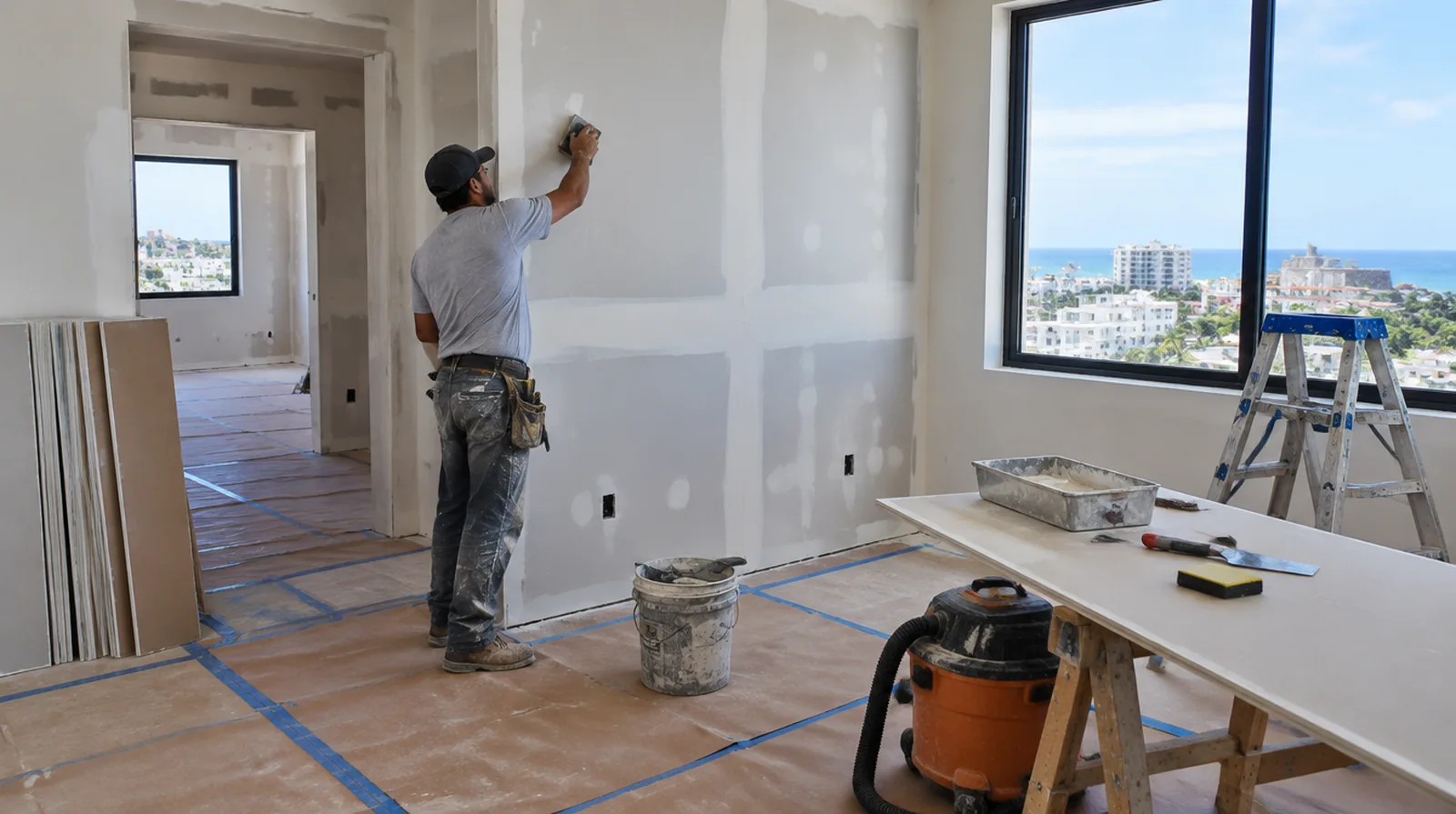
Use appropriate primer
New texture and adjacent painted material can absorb finish coats at differing rates. Choose suitable primer to support the coating system without unnecessarily flattening the intended pattern. When the history of a repair is uncertain, note when it became noticeable and whether its appearance has altered across distinct seasons.
Allow time before painting
Applying paint before the texture has dried can disturb the pattern or produce uneven absorption. The quote should explain whether the next decorating stage is included or left to a painter. When the decorative coating has been selected, tell the finisher its intended sheen and color while the surface preparation standard is still being agreed.
Consider hand applied surfaces
Troweled textures need attention to tool direction, pressure and spacing between repeated shapes. A representative trial is useful when there is no standard machine setting that reproduces the existing finish. Where light reflects along the wall, inspect the complete plane instead of limiting the review to the edge immediately next to the repaired section.
Blend beyond the patch
An abrupt rectangular texture boundary often draws attention even when the pattern itself is close. Feathering the application into adjacent stable material can soften the transition around the repair. When the same defect has returned, share information about previous repair methods so the next assessment can consider why they did not last.
Check the underlying repair
A matching texture cannot hide a raised patch edge or a panel that sits proud of the wall surface. The base repair ought to be flat and firmly bonded before a decorative pattern is added. At a repair beside an opening, allow clearance for moving board through the doorway and space to use the finishing tools effectively.
Prepare a sample area
A small test helps establish particle size, spacing and the amount of flattening needed. Reviewing the sample before coating the full repair reduces uncertainty about the expected blend. If access passes through a shared space, arrange protection and a delivery route that do not unnecessarily obstruct other occupants.
Set realistic blend expectations
An exact invisible match is not always possible on a weathered or repeatedly painted surface. If local matching remains obvious, discuss whether a wider surface treatment would be preferable. If occupancy must resume on a certain day, include the later primer and paint stages in the timetable as well as drywall installation and finishing.
Protect surrounding finishes
Mask adjacent materials against sprayed compound and other application debris. The protection plan should cover the actual application area instead of only the original hole. For a project with several trades, agree which inspection or handover point must happen before the next person starts work.
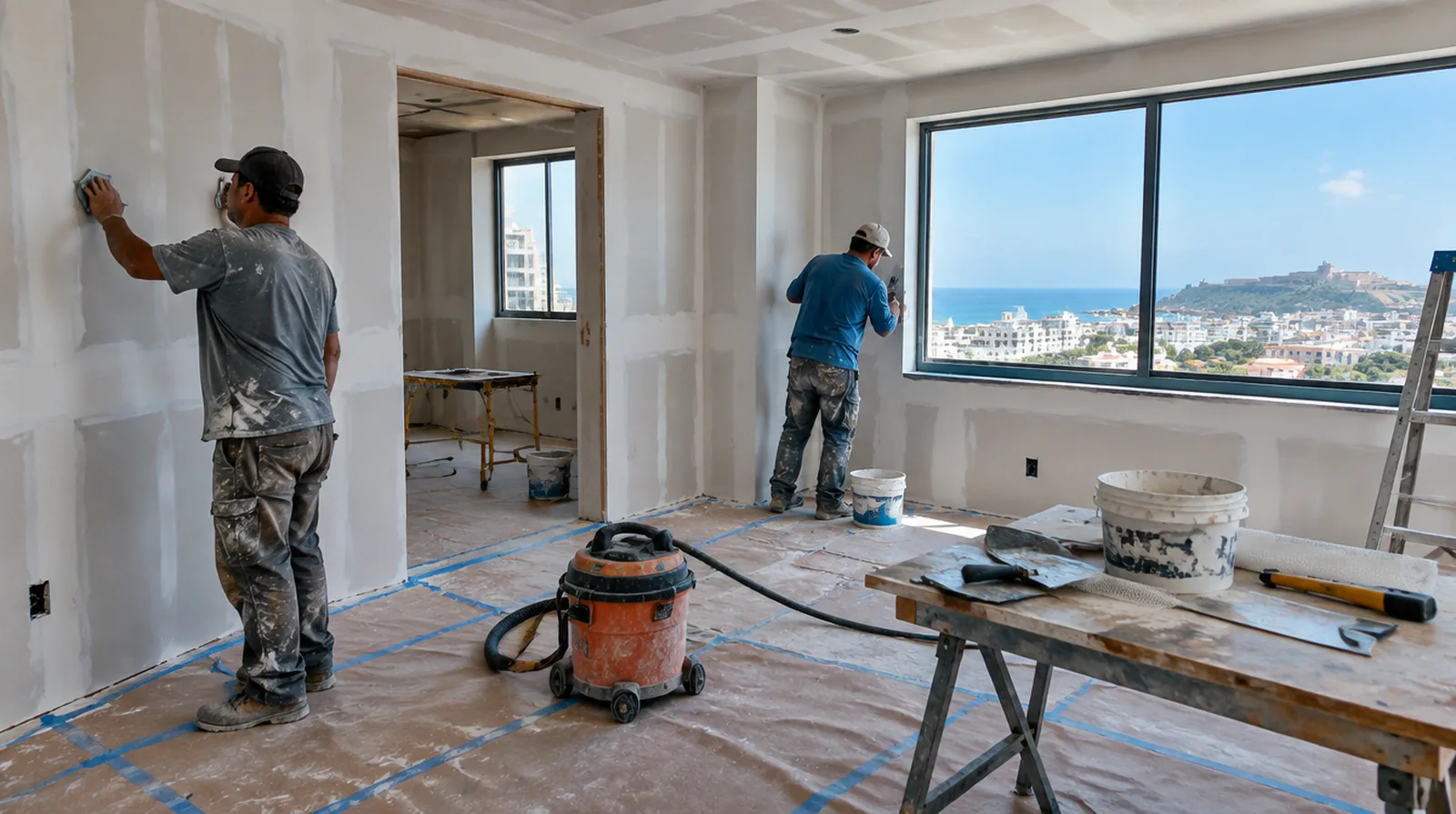
Study the paint layers
Repeated painting can soften an old pattern and change how its peaks reflect light. Matching the wall surface as it looks now can require a different application from the pattern that was first installed. Where a neat final edge matters, agree whether the finish ends against existing trim or whether that trim will be removed and replaced.
Judge from normal positions
Assess the dried texture from everyday viewpoints rather than judging only a close view of a wet sample. The planned paint sheen and oblique light both belong in the final appearance discussion. For a repair that crosses several surfaces, measure the affected planes separately so the estimate can explain where each finishing treatment starts and stops.
Project context in San Juan
In San Juan, warm humid conditions make it especially useful to distinguish an old dry stain from a continuing source of moisture. Once the underlying condition is understood, arrange a dry storage area for panels and discuss how air can circulate during finishing.
Scope questions before finishing
If access passes through a shared space, arrange protection and a delivery route that do not unnecessarily obstruct other occupants.
When more damage could be hidden, ask how any added scope will be documented before extra material is removed or replaced.
If the space will remain occupied, identify a practical separation between the work area and the space that still needs daily access.
For a small repair with extensive setup, compare the total scope rather than assuming the price should follow the hole dimensions alone.
Where the quoted work stops before painting, request an explicit description of what remains so the next decorating stage can be priced realistically.
When reviewing the finished work, use the agreed lighting and natural room viewpoints so the assessment reflects the intended use of the space.
At an edge beside built in furniture, state whether the obstruction will be removed or whether finishing stops at the section that can be reached.
Where a neat final edge matters, agree whether the finish ends against existing trim or whether that trim will be removed and replaced.
Where light reflects along the wall, inspect the complete plane instead of limiting the review to the edge immediately next to the repaired section.
Where flooring is staying in place, agree on protective coverings and check that tools and material handling will not damage the noticeable finish.
If materials must cross common building areas, plan the protection and access route so other occupants are not needlessly obstructed by deliveries.
For an initial assessment from pictures, provide an overall room photograph and a detailed view of the defect so both context and scale are apparent.
Explore the San Juan drywall overview for related options, or read the project planning information before arranging the next stage.
More planning details for San Juan
Describe when the mark changes and whether it appears near a cooled room, pipe route or ceiling junction. A drywall proposal should not assume that covering the visible spot resolves the cause. Access planning is another separate item: identify delivery arrangements, the working clearance and any building management requirements before ordering material.