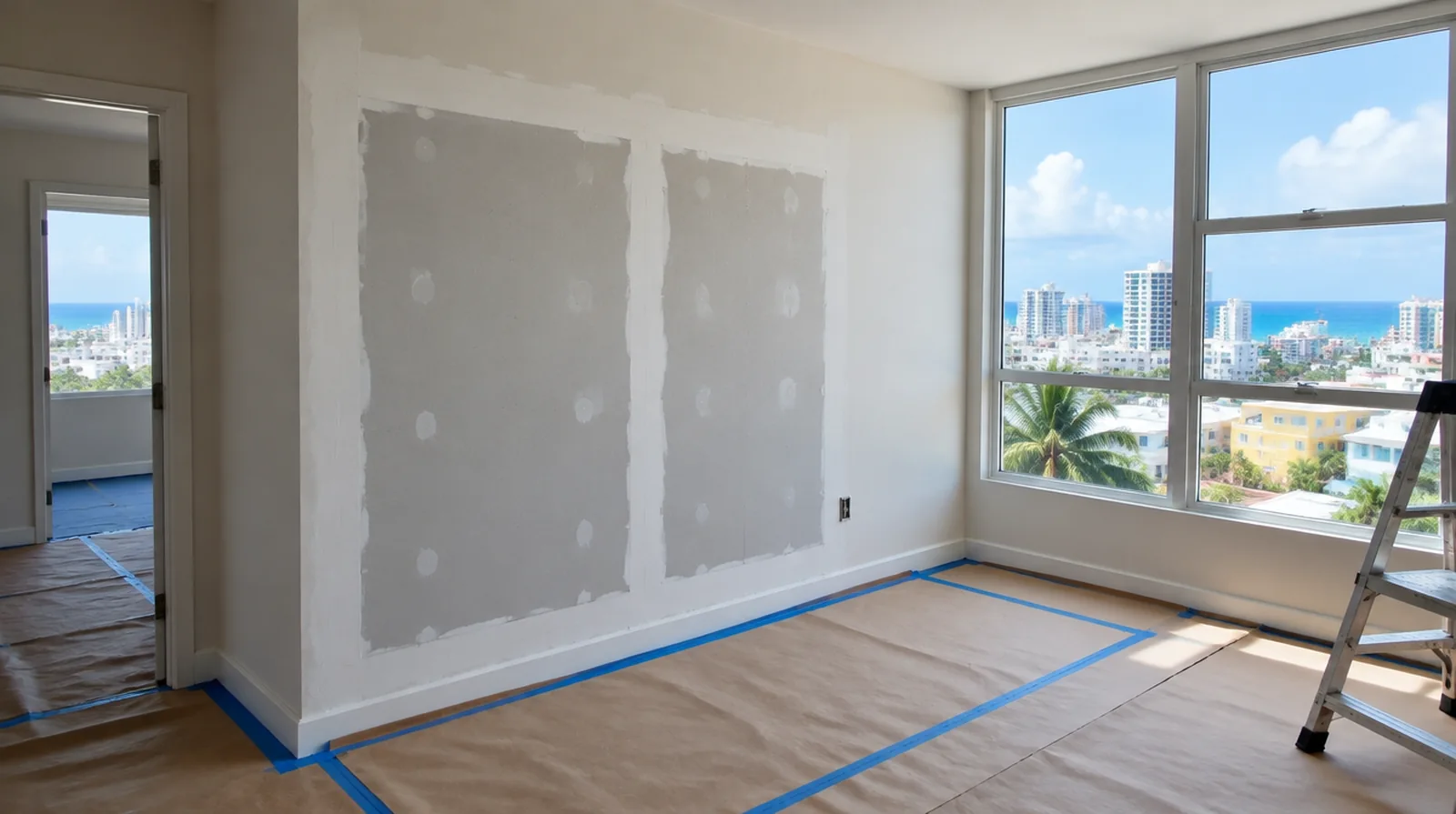
Choose the patch boundary
Loose paper and crumbling gypsum must be removed until the surrounding panel can support a durable repair. A tidy rectangular cut often provides stronger backing than following an irregular broken edge. When reviewing the finished work, use the agreed lighting and natural room viewpoints so the assessment reflects the intended use of the space.
Reinforce panel seams
Joint tape bridges the transition between the original wall and a replacement section. The tape belongs in a compatible bedding coat without trapped air or dry unbonded edges. When a quote includes multiple visits, ask what happens during each stage and when the room needs to remain undisturbed between coats.
Review with side lighting
A patch that looks flat from the doorway may still show a small hollow under a nearby window. Window light may reveal a contour that ordinary room lighting hides, while coating sheen creates a separate issue. When building management controls access, agree delivery hours and common area protection before committing to a start or finish date.
Feather beyond the opening
Concealing a patch perimeter requires a tapered finishing area wider than the opening itself. The gradual transition is particularly important where a window lights the surface from the side. If a room has only limited ventilation, discuss how the finishing materials can dry without disrupting comfort or spreading dust elsewhere.
Handle small fastener marks
A noticeable screw or nail bump can indicate movement between the board and its supporting framing. Adding appropriate fastening nearby may be necessary before the damaged spot receives finishing compound. When building management controls access, agree delivery hours and common area protection before committing to a start or finish date.
Prepare for primer
Fresh compound and existing painted drywall absorb coatings differently unless the repair receives suitable primer. Establish whether suitable primer is part of the repair or will be applied by another contractor. Where existing floors will remain, specify protective measures and review the path used by panels, equipment and finishing tools.
Protect adjacent surfaces
Small wall repairs can still distribute fine dust through the space if protection is inadequate. Identify the possessions to move and agree which adjacent spaces need to stay usable. In a room with little free floor space, identify temporary storage for belongings and establish sufficient clearance for the work before delivery.
Build thin finishing coats
Several controlled applications are generally easier to flatten than one deep deposit of joint compound. Each layer needs enough drying interval before the next pass can be judged accurately. For walls beside bright windows, review a dry sample from an oblique angle as well as looking straight at the repaired surface.
Document recurring movement
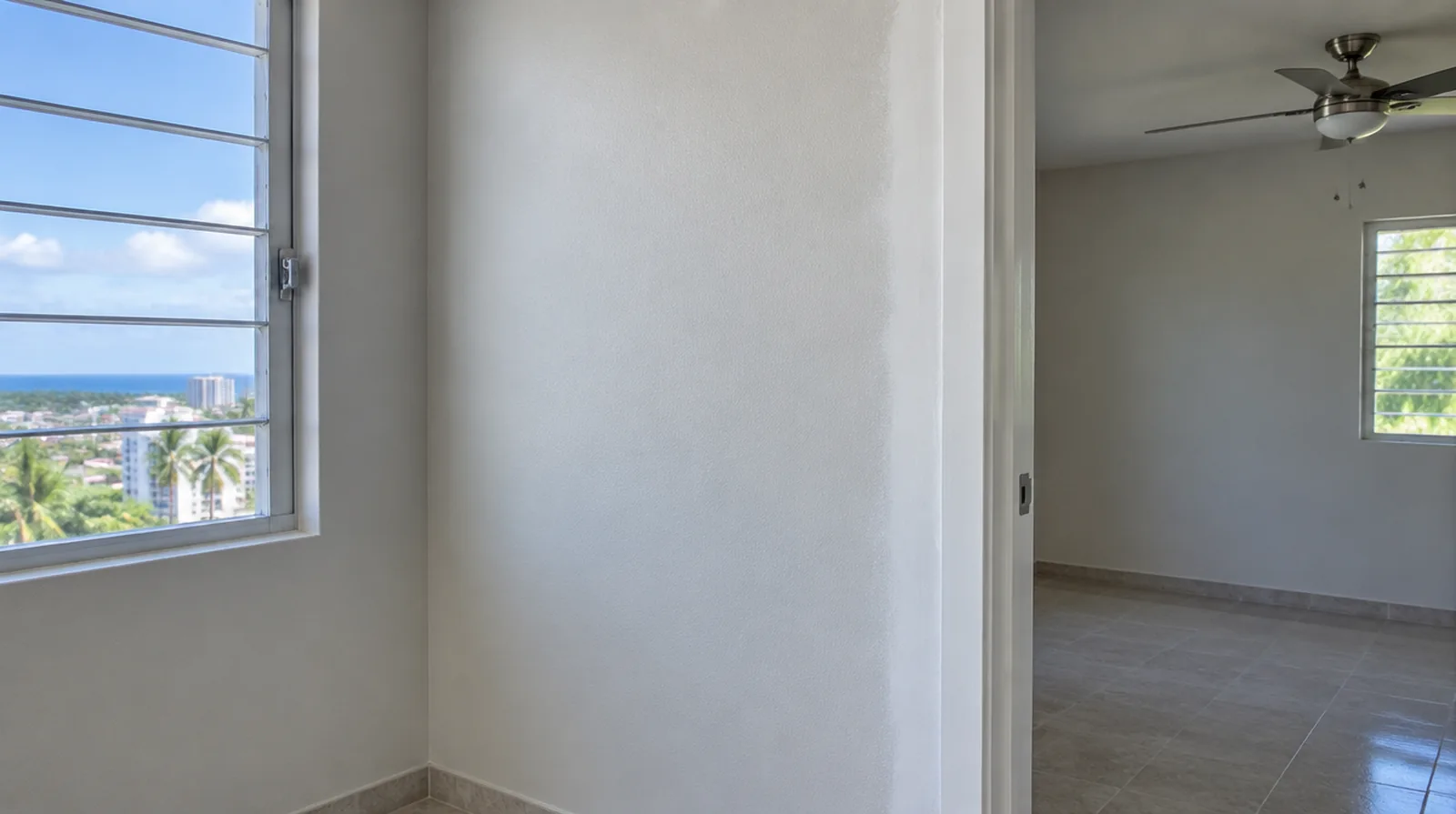
A crack that repeatedly reappears could need the cause investigated before more cosmetic work. State any moisture or movement concerns that another professional must resolve ahead of the drywall repair. Where a surface has been painted many times, consider whether differences in texture or sheen will require a wider decorative treatment.
Set the paint boundary
Even a well blended patch can remain visible when touched up with an aged or unavailable paint color. Repainting the full wall from corner to corner may give a more consistent appearance. Where occupants have dust sensitivity concerns, agree containment and cleaning measures before settling the way the room will be staged.
Project context in San Juan
A drywall proposal should not assume that covering the visible spot resolves the cause. Once the underlying condition is understood, arrange a dry storage area for panels and discuss how air can circulate during finishing.
Scope questions before finishing
If a separate painter completes decoration, agree the condition of the handed over surface and assign responsibility for small final corrections.
When a paint contractor follows the drywall work, define the surface condition being handed over and decide who handles any minor final touch ups.
For a project with several trades, agree which inspection or handover point must happen before the next person starts work.
If the wall work belongs to a broader renovation, coordinate its order with flooring, cabinetry and trim instead of scheduling finishing in isolation.
Before comparing two proposals, check that both include the same protection, finishing and cleanup boundaries rather than comparing totals alone.
If the proposal requires return visits, identify the purpose of each stage and the intervals during which finishing material needs to remain undisturbed.
Where a neat final edge matters, agree whether the finish ends against existing trim or whether that trim will be removed and replaced.
When panel replacement exposes a cavity, resolve any required inspection before that opening is closed and the surface finishing begins.
If materials must cross common building areas, plan the protection and access route so other occupants are not needlessly obstructed by deliveries.
When the project space includes a doorway, check the clearance for panel movement as well as the amount of space available for finishing tools.
Where flooring is staying in place, agree on protective coverings and check that tools and material handling will not damage the noticeable finish.
When the decorative coating has been selected, tell the finisher its intended sheen and color while the preparation of the surface standard is still being agreed.
Explore the San Juan drywall overview for related options, or read the project planning information before arranging the next stage.
More planning details for San Juan
In San Juan, warm humid conditions make it especially useful to distinguish an old dry stain from a continuing source of moisture. Describe when the mark changes and whether it appears near a cooled room, pipe route or ceiling junction. Access planning is another separate item: identify delivery arrangements, the working clearance and any building management requirements before ordering material.